
Case studies · Industrial equipment manufacturing
Kit inspection with computer vision: 63% fewer complaints
Every kit checked against its specification before assembly, with doubtful cases routed to an operator.
Client: Global manufacturer of industrial equipment · Industry: Industrial equipment manufacturing · Solutions: Visual quality inspection
The challenge
One machine is built from hundreds of parts. Variants can look deceptively alike, and configurations change from order to order.
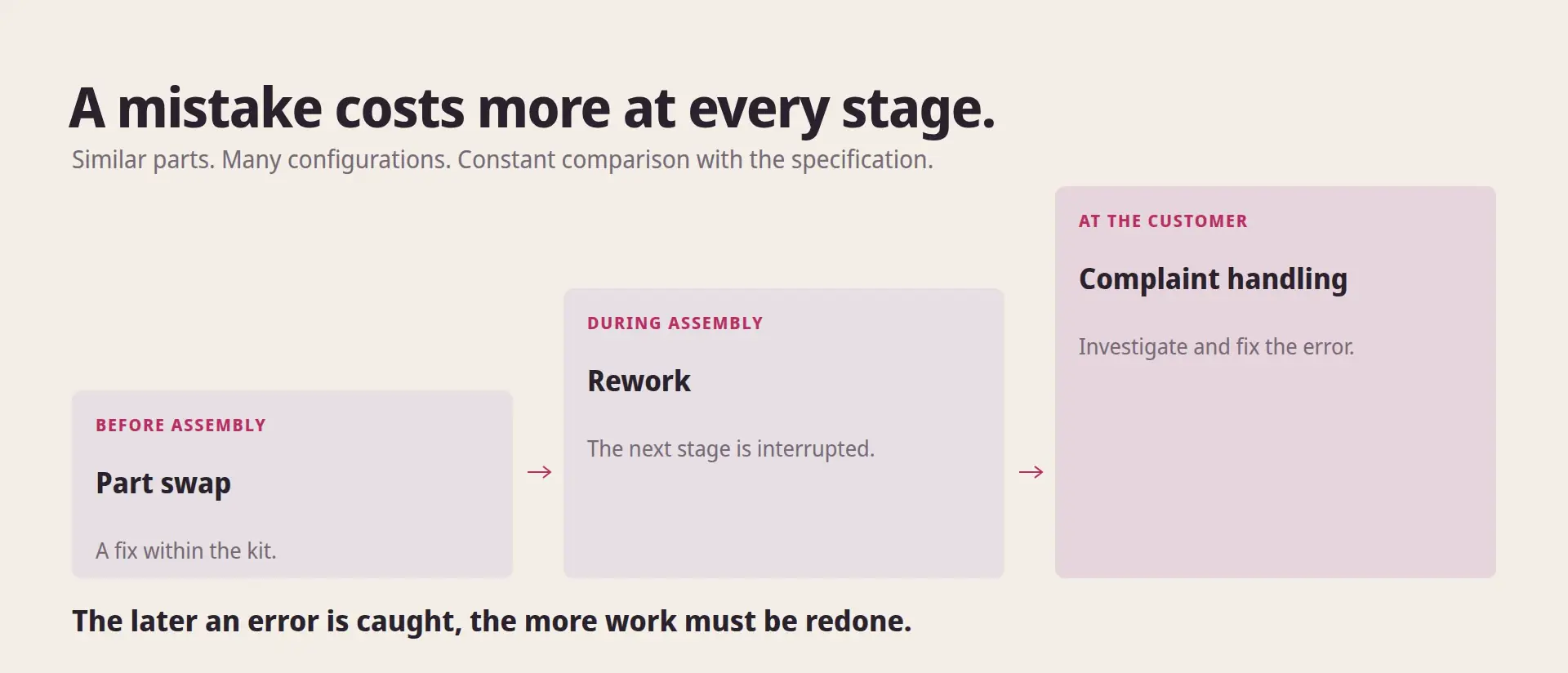
Manual checks require constant comparison with the specification, and the later a mistake is caught, the more work has to be redone. When the customer finds it, it becomes a complaint.
01 / Data layer
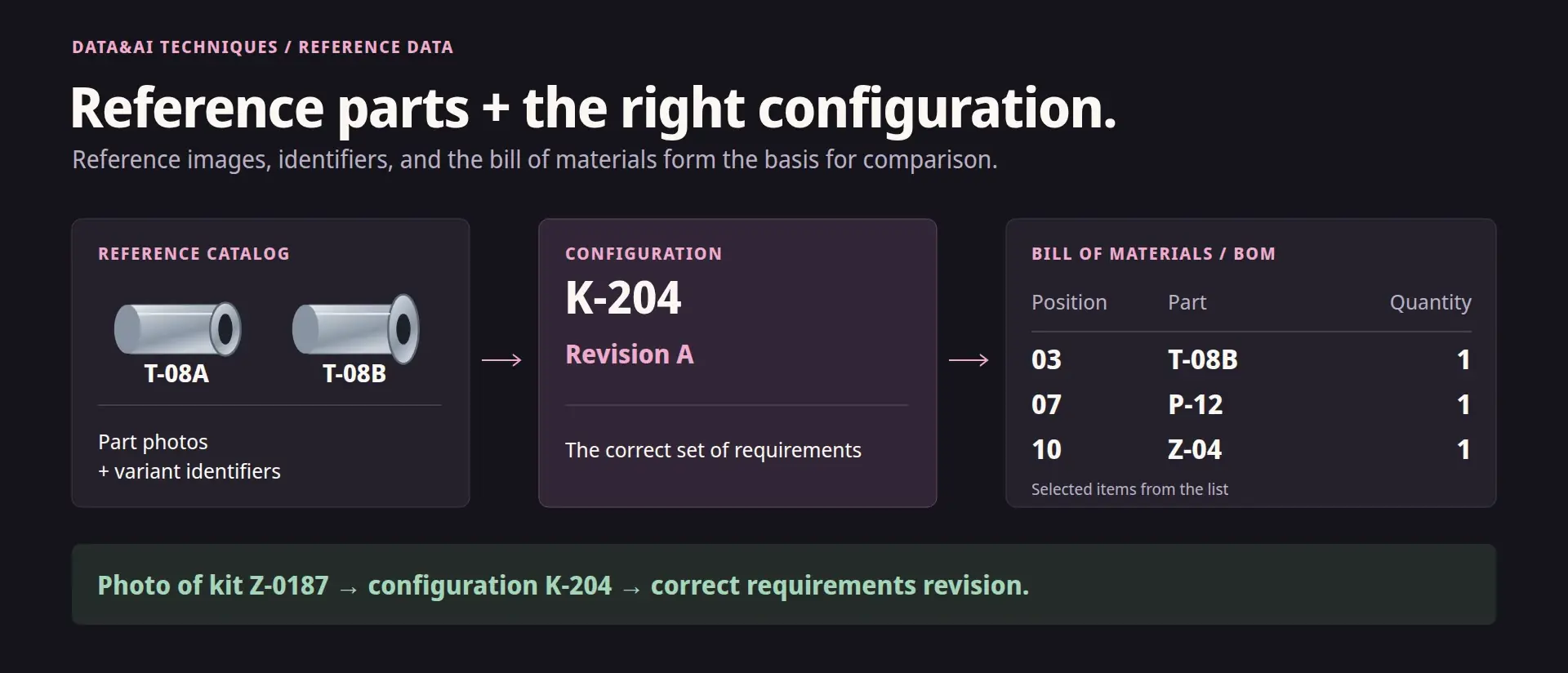
Reference photos of parts with their identifiers and variants.
The bill of materials sets the requirements for each configuration and revision; every kit photo is matched to the right specification and reference catalogue.
02 / AI layer
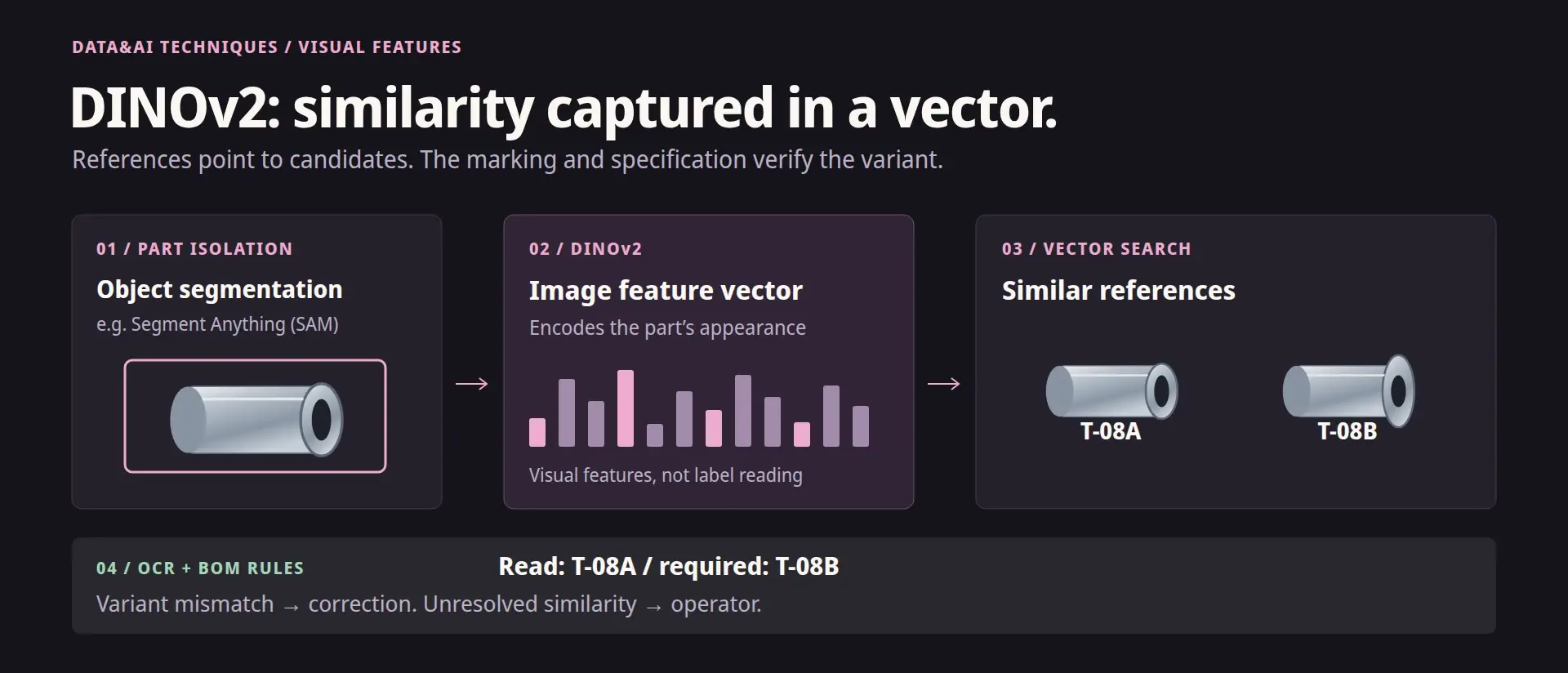
Each part is isolated in the image and described by DINOv2 as a feature vector; a vector similarity search finds matching reference parts as recognition candidates.
OCR and specification rules verify the variant. Anything uncertain, such as an unreadable label, holds the approval and goes to an operator.
The project, scene by scene
The frames come from our film about this deployment.
01 / 08
Cost of a mistake
One machine is built from hundreds of parts. Variants can look deceptively alike, and configurations vary by order. Manual checks require constant comparison with the specification. The later a mistake is caught, the more work must be redone.
02 / 08
DATA: reference data
The data layer holds reference photos of parts, their identifiers, and variants. The bill of materials sets requirements per configuration and revision. We match the kit photo to the right specification and reference catalog.
03 / 08
AI: image and OCR
First, we isolate the part in the image. DINOv2 describes its appearance as a feature vector. A vector similarity search finds matching reference parts. These are recognition candidates. OCR and the specification rules verify the variant. The operator resolves any doubts.
04 / 08
Two mismatches
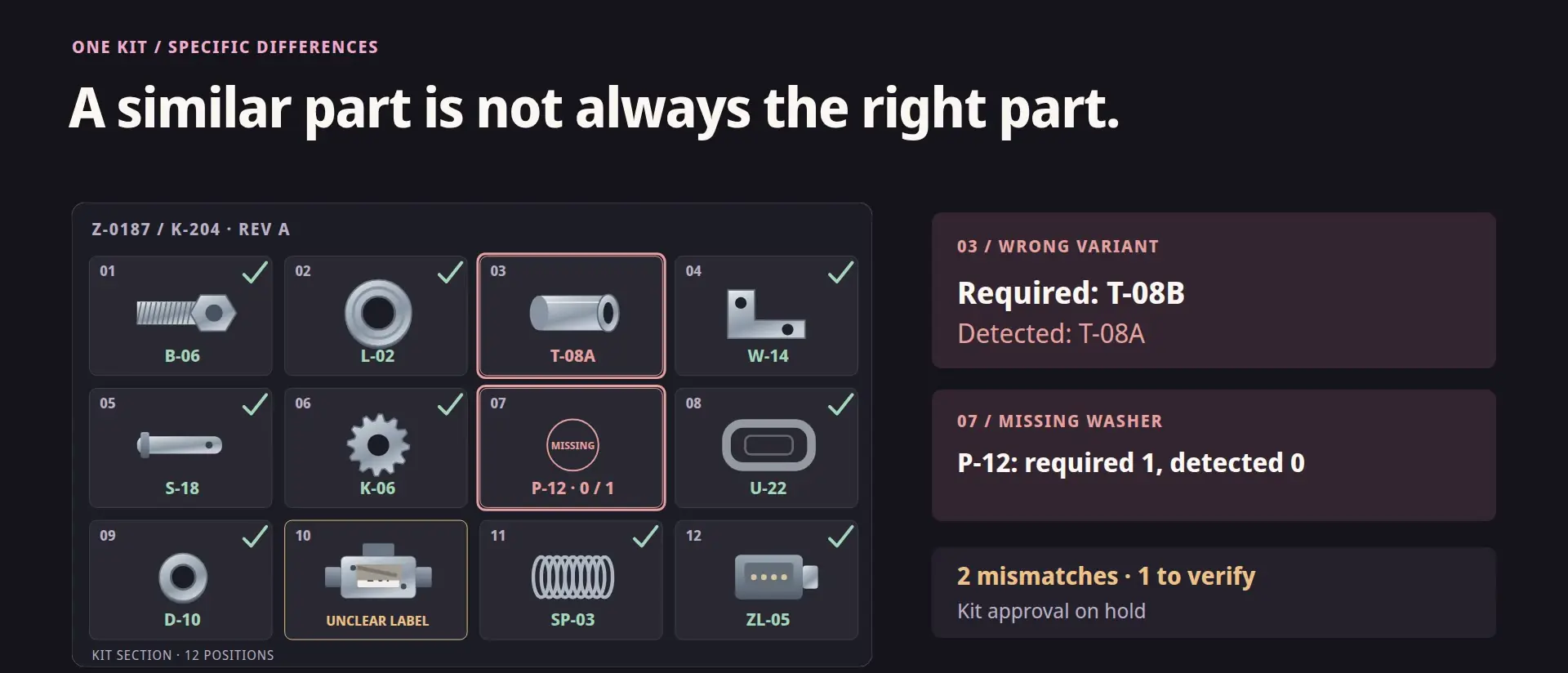
Here the bushing looks similar, but its marking shows another variant. Beside it, a washer is missing. The system marks both spots and shows what is required versus what is on the tray.
05 / 08
Exception for the operator
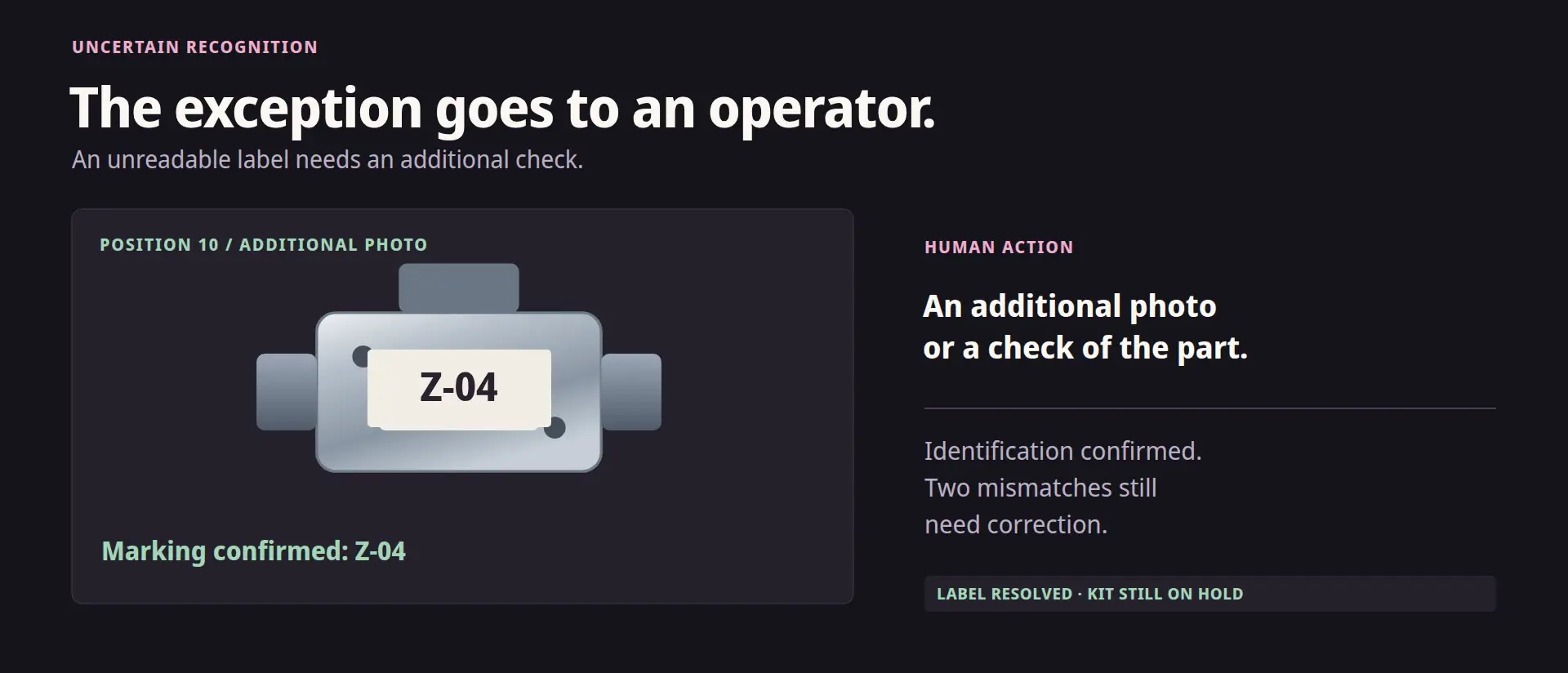
One more item needs checking: its label is unreadable. The system holds approval and routes the case to an operator. An additional photo makes the marking readable. Any uncertainty must be resolved before the kit is accepted.
06 / 08
Correction and re-check
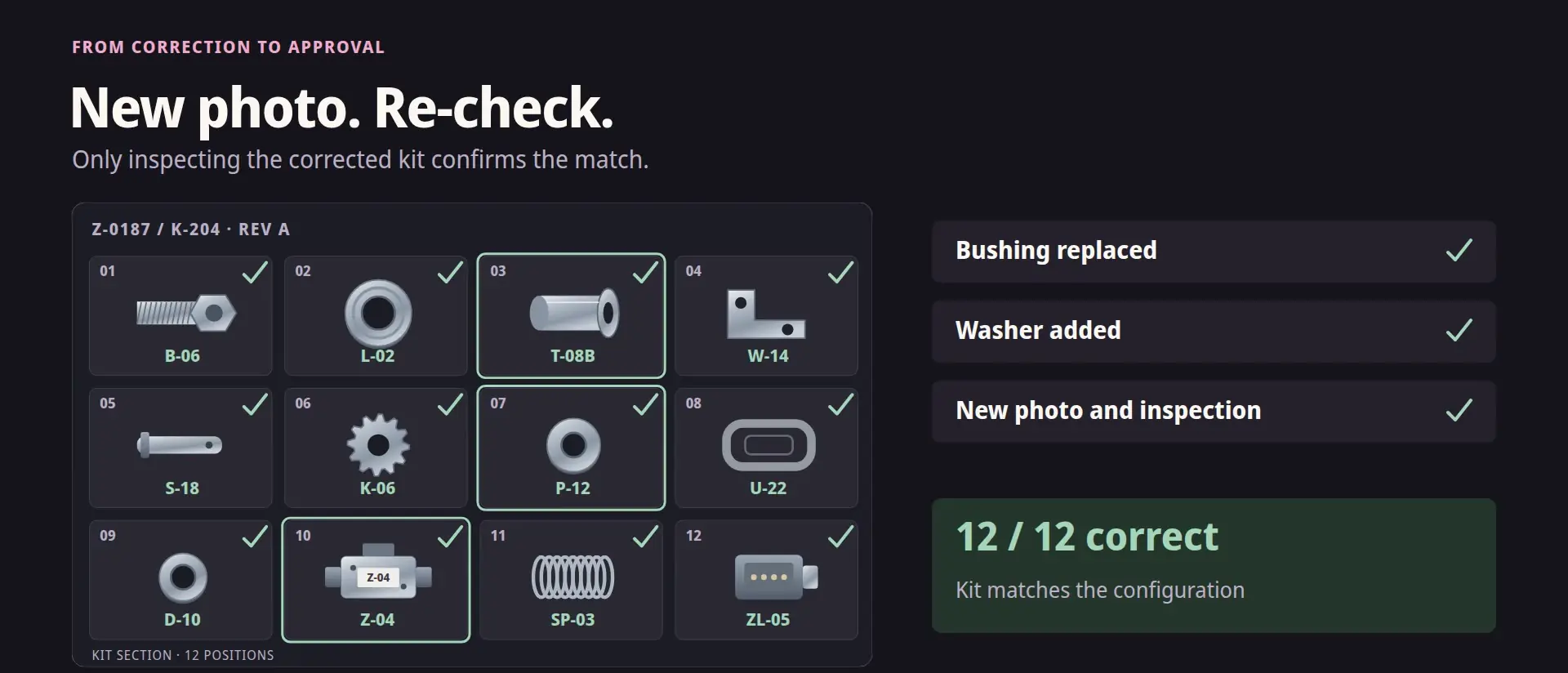
The operator replaces the wrong bushing. Next, they add the missing washer. The kit goes back for inspection. Only a new photo and a repeat comparison confirm the match. Closing the issue alone is not enough for approval.
07 / 08
Report with photos
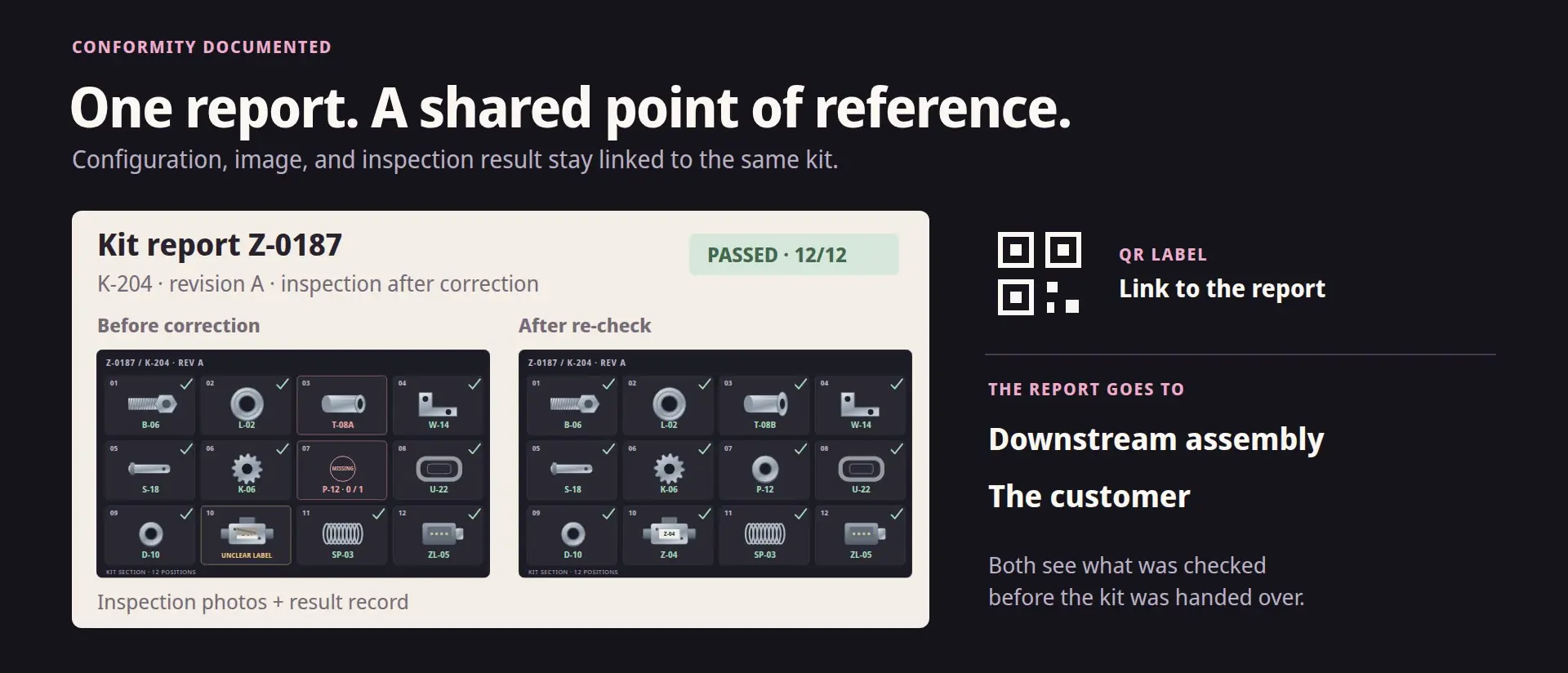
The report links the kit ID, its configuration, photos, and inspection result. A QR code leads back to this document. Assembly and the customer get a shared record of what was checked before handover.
08 / 08
Business impact
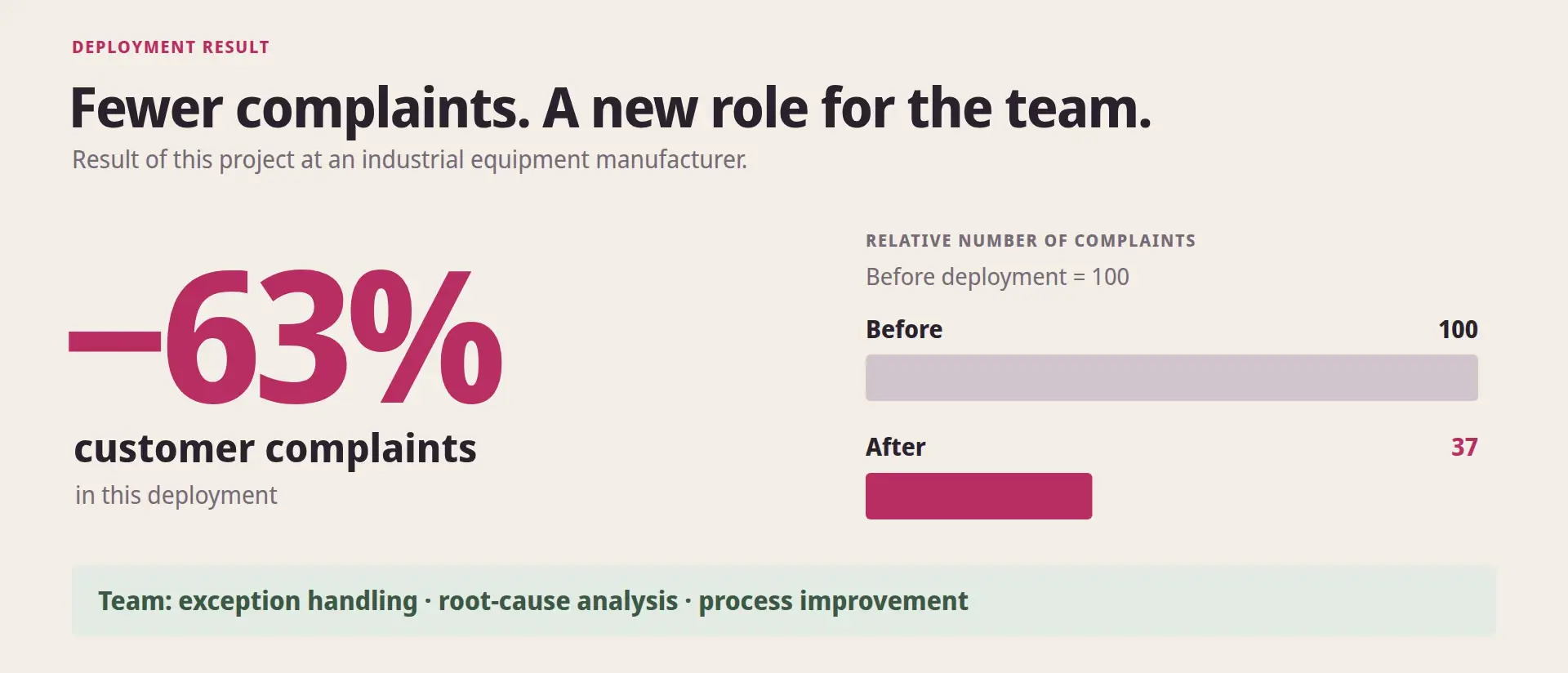
In this deployment, customer complaints dropped by sixty-three percent. The system took over repetitive checks. People could focus on exceptions, root causes of nonconformities, and process improvement.
Results
- Customer complaints dropped by 63%.
- The system took over repetitive checks; people focus on exceptions, root causes and process improvement.
Next stage, in development with the client
Help during kitting itself: the camera recognises the part at the workstation and flags a wrong variant or a skipped part before the kit reaches assembly. This is the target workflow, still in development.
Start with
Fixed scope, fixed price
Pilot on your data
One use case, your real data, a success metric agreed up front. The model works in shadow mode next to people before anyone relies on it.
From
€10,500net
Duration: 6 to 8 weeks
Who leads it: An AI engineer and a data engineer, with an architect overseeing production readiness from day one.
Plan a pilotServices:AI engineering into production
Related case studies
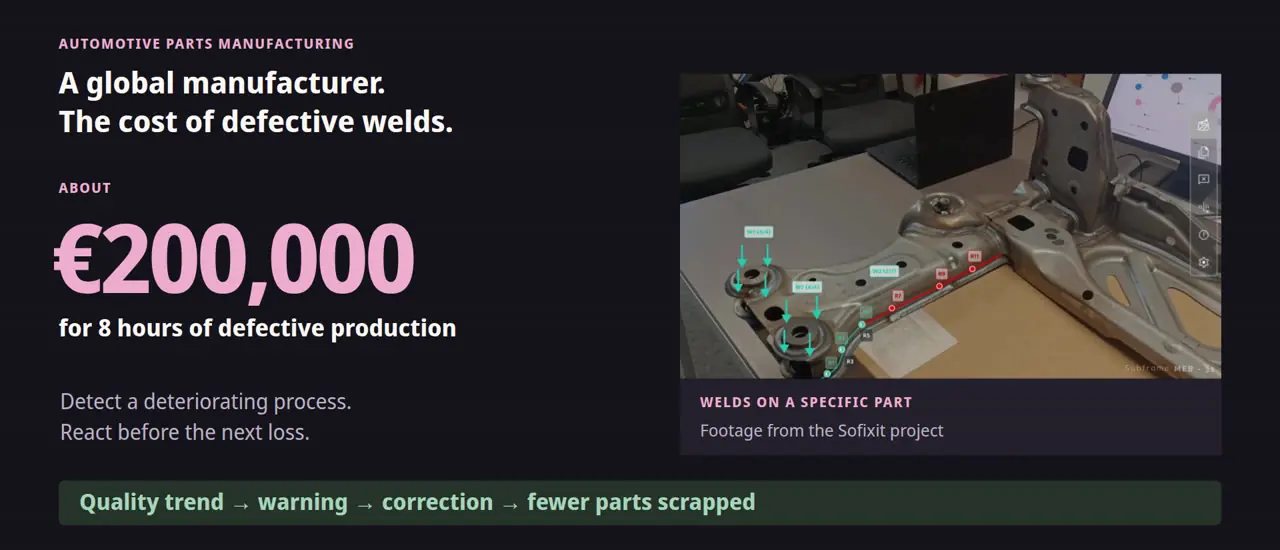
Weld quality AI: 86% fewer defective parts
Global automotive parts manufacturer · Automotive, metal components
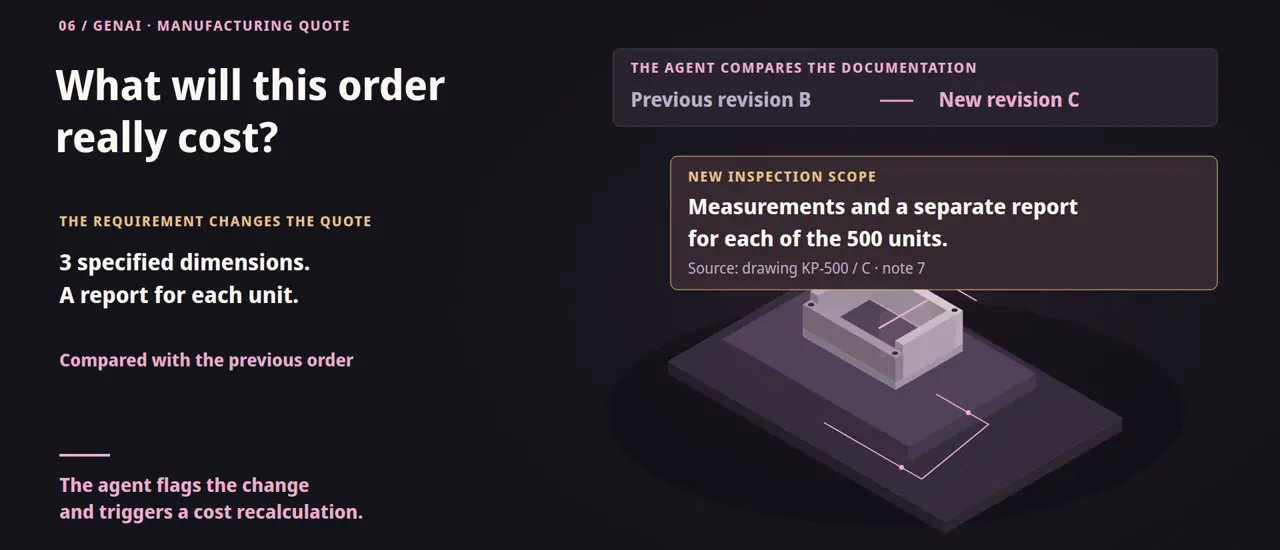
GenAI quoting agent: from 4 to 6 hours to 15 minutes
Manufacturing company · Manufacturing
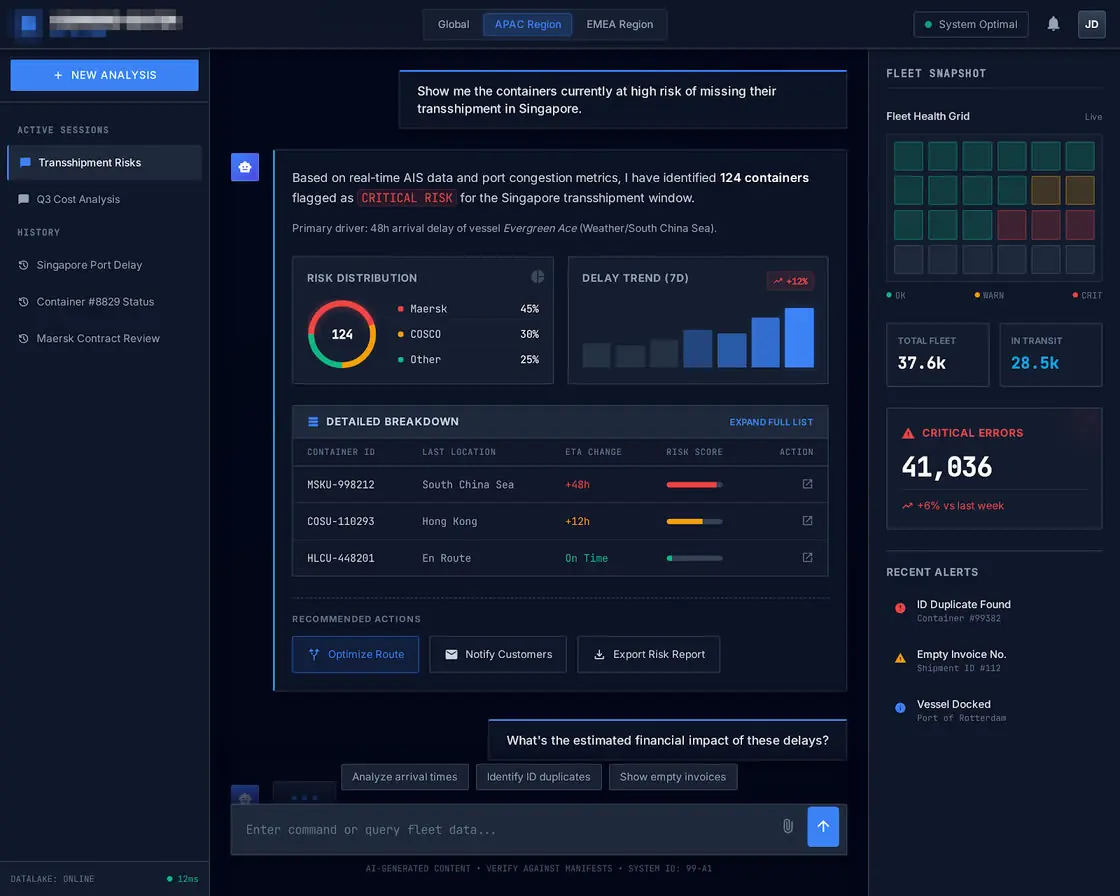
Logistics control tower: 37.6k containers tracked in real time
Global logistics provider, 30,000+ active shipping containers · Logistics
Let's talk about your project
Tell us about your case
Pick one problem.
Show us the data you have.
Let's agree a measurable goal.
Name the process and the data you have. An engineer, not a call centre, gets back to you.
We reply within one business day.