

Industries
Data and AI for telecom
Telecom runs on huge volumes of network data that often is not allowed to leave the data centre. We build platforms that process it faster and cheaper, and the AI that works on top.
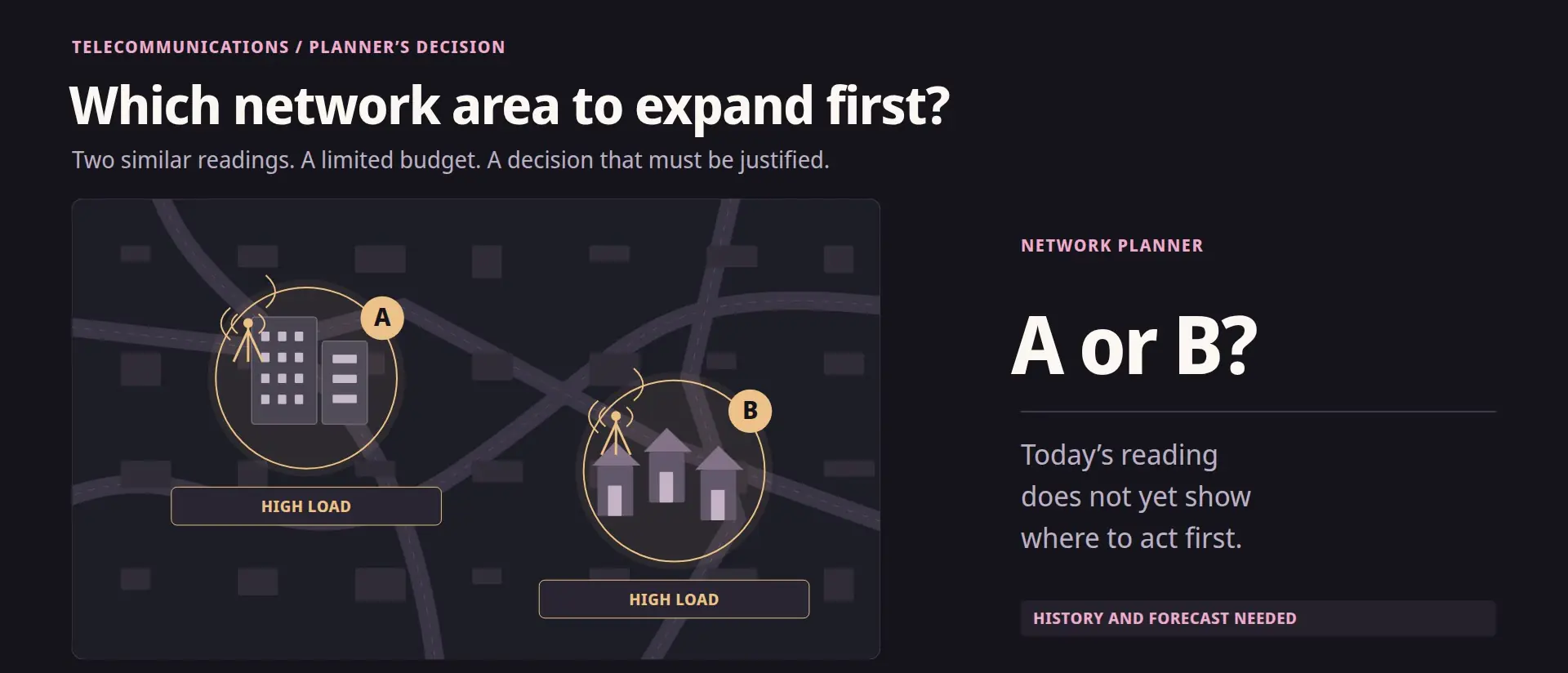
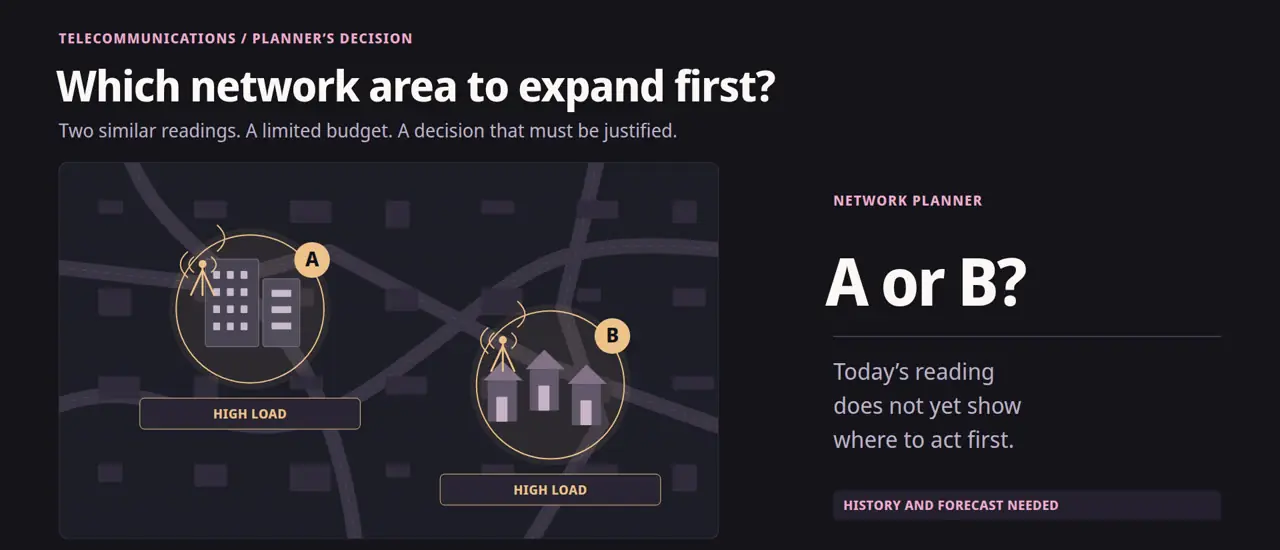
Which network area to expand first?
Two areas are under heavy load and the expansion budget is limited. Today's reading does not settle it: in one area the peak returns every day at the same time, in the other traffic keeps growing.
01 / 06
Which area to expand?
Imagine a telecommunications network planner. Two areas are under heavy load, and the budget for capacity expansion is limited. Which one should get priority? Today's reading doesn't settle it yet.
02 / 06
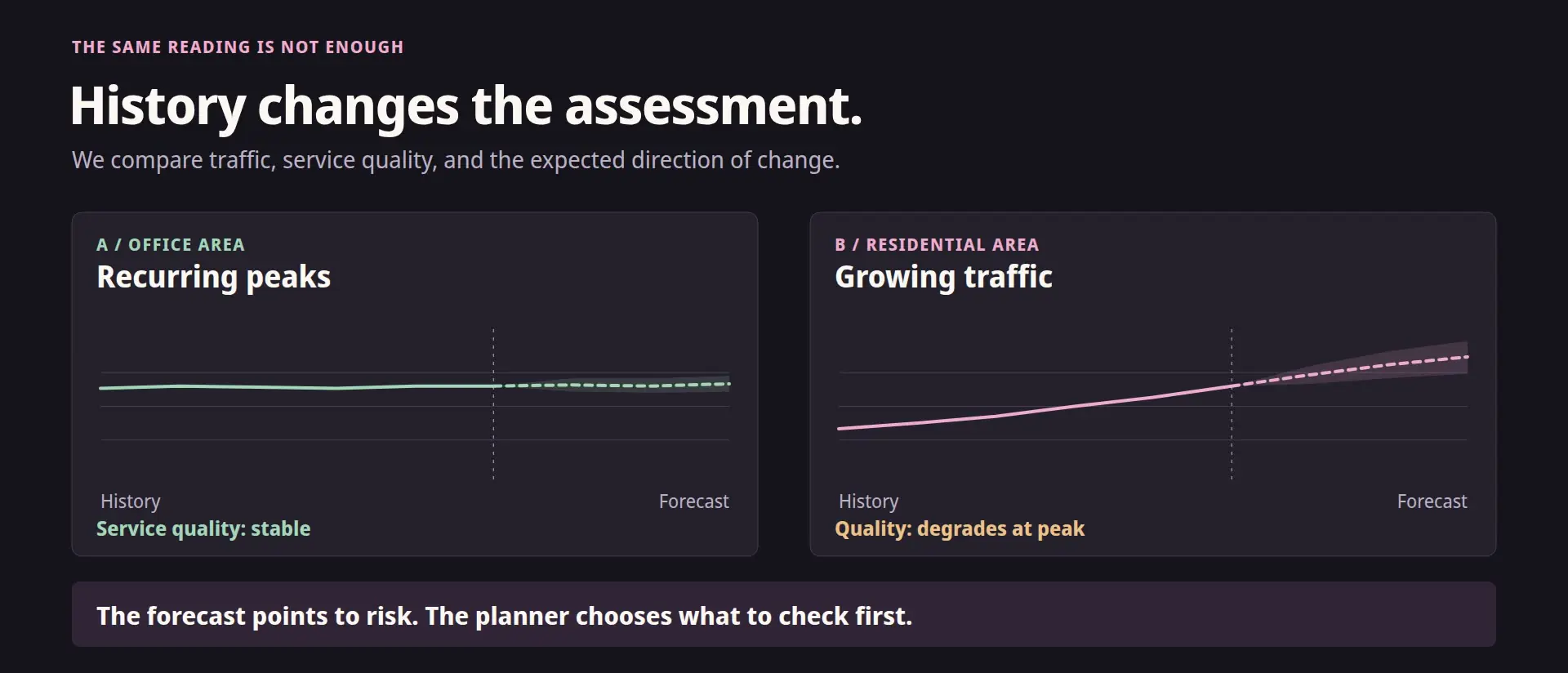
What do history and forecasts change?
In the office area, high load regularly returns at the same time of day, and quality stays stable. In the residential area, traffic is growing, and problems appear at peak hours. The planner needs history, quality information, and a forecast. On that basis, they decide where to assess the need for expansion first.
03 / 06
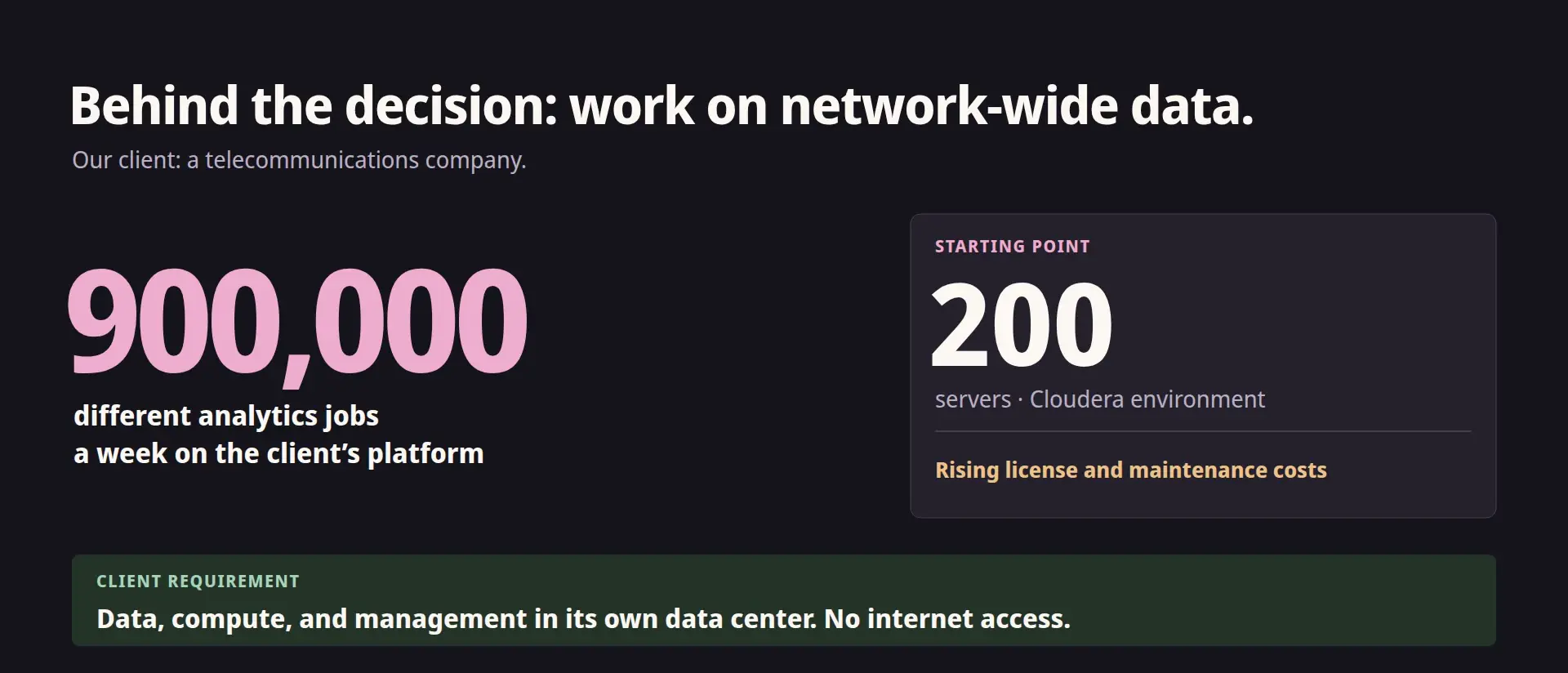
Why a data platform?
Such decisions require processing data from the whole network. Our client was a telecommunications company. Its platform ran nine hundred thousand jobs a week. Costs were rising, and teams needed faster analytics and models. Everything had to run in the client's data center, without internet access.
04 / 06
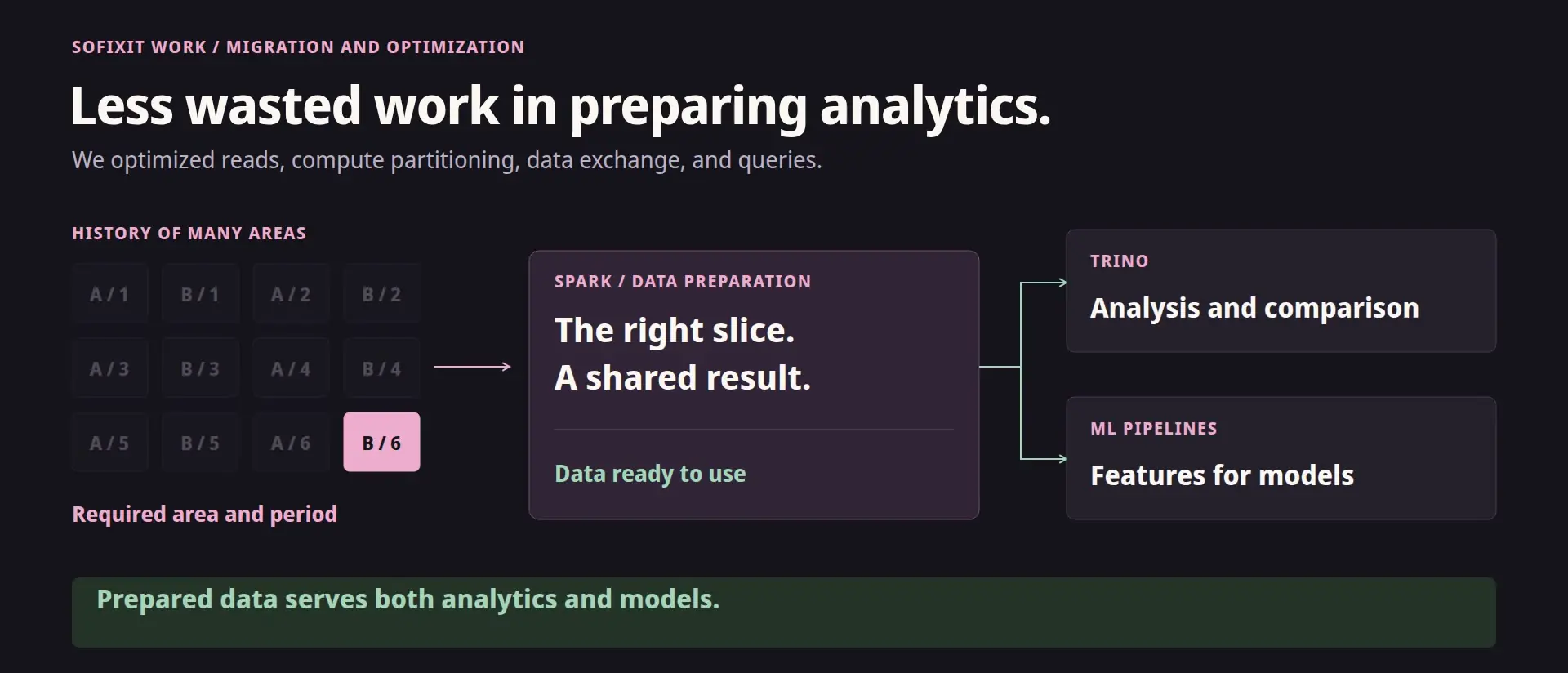
What did Sofixit do?
Sofixit rebuilt the platform and optimized how this work was executed. We improved data reads, the partitioning of computation, data exchange between processes, and queries. Spark prepared the data, and Trino served the stored results for analysis. ML pipelines used the same foundation.
05 / 06
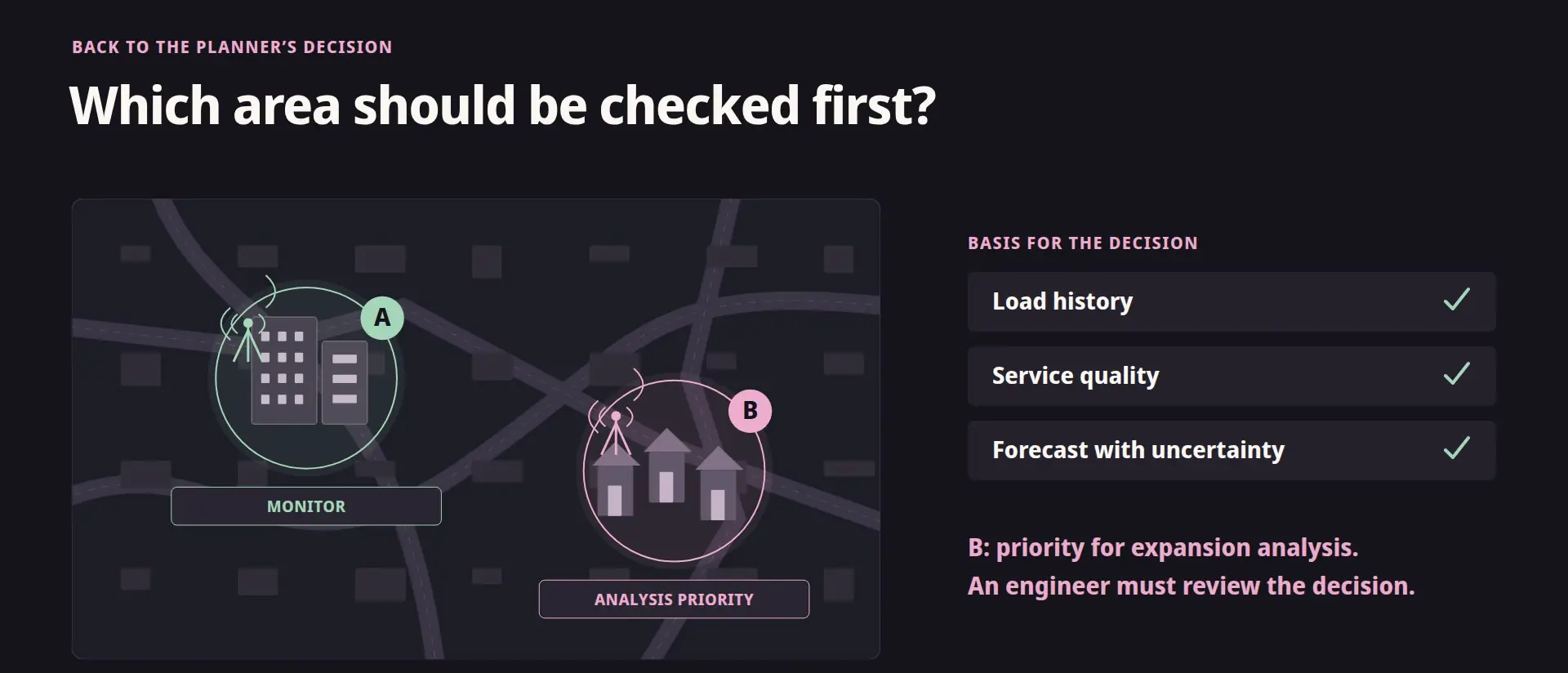
Back to the planner’s decision
They see what the recommendation is based on and can compare options. This is the kind of data use a modern platform is built for.
06 / 06
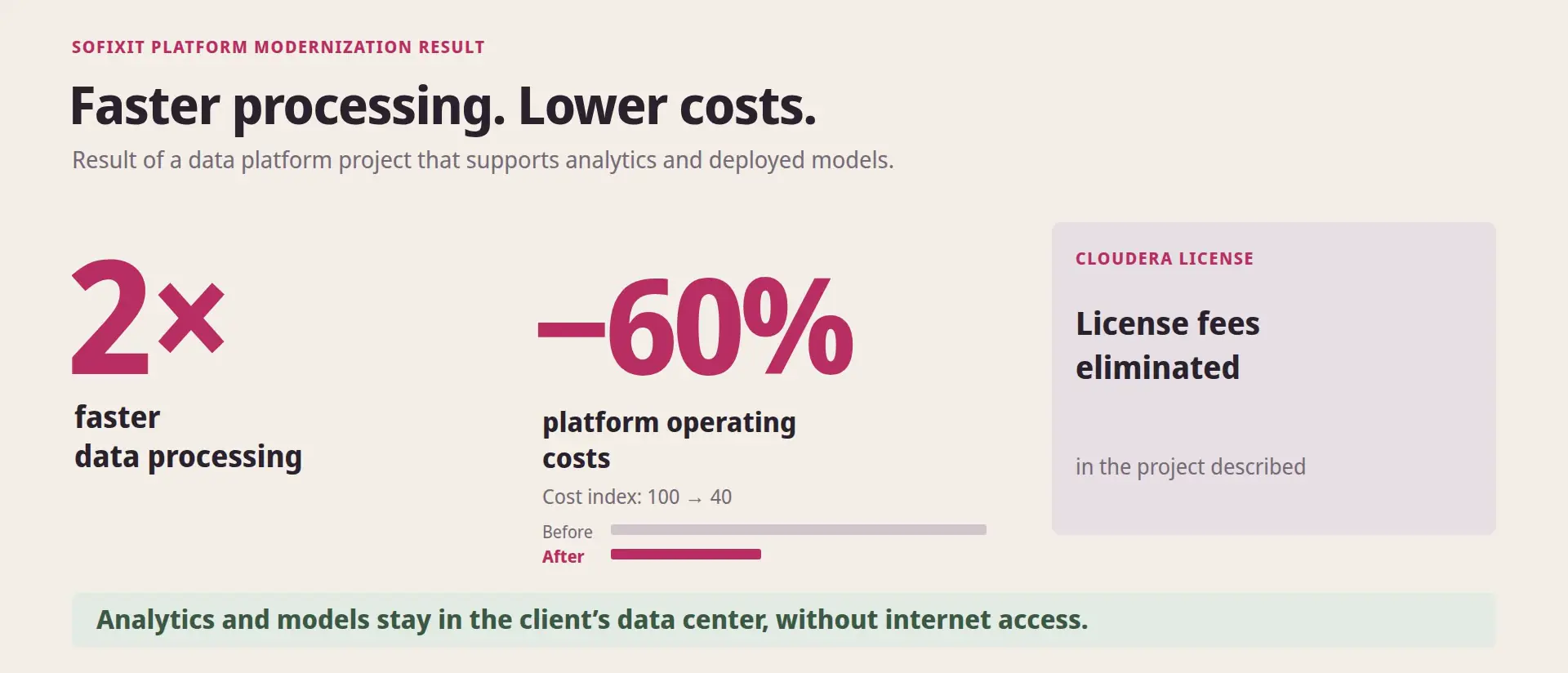
Platform modernization results
In this project, processing became twice as fast, and operating costs fell by sixty percent. Cloudera license fees were eliminated. Analytics and deployed models stayed in the client's data center.
Problems we solve for operators
2×
Expensive, slow data platforms
A staged move off Cloudera to Spark and Trino: twice as fast, 60% lower operating costs, no licence fees.
<1 s
Network data that arrives too late
Kafka and Flink stream processing: latency down from 5 minutes to under 1 second, 25% better network availability.
03
Hours of SQL for one answer
An AI assistant over a semantic layer of network metrics: a chart instead of ~4 hours of manual correlation.
04
Many alerts, one incident
An agent links events, proposes a fix for the network and waits for an engineer's approval before anything changes.
Start with
Questions buyers ask
Can you work in an air-gapped environment?
Yes. In our telecom platform project everything ran in the client's data centre with no internet access.
Will an AI agent change our network on its own?
No. It proposes a command, shows the impact and waits for approval; low-confidence actions go through an extra validation step.
How do you migrate without breaking existing reports?
In stages, comparing results job by job before each switchover, with rollback at every step.
Let's talk about your project
Tell us about your case
Pick one problem.
Show us the data you have.
Let's agree a measurable goal.
Name the process and the data you have. An engineer, not a call centre, gets back to you.
We reply within one business day.