
Case studies · Telecommunications
Telecom data platform: 2× faster, 60% lower operating costs
A staged modernisation off Cloudera, on-premise and without internet access, ready for analytics and ML.
Client: Telecommunications company · Industry: Telecommunications
faster data processing
operating costs
Cloudera licence fees
jobs a week
The challenge
The client's platform ran 900,000 jobs a week. Costs were rising, and teams needed faster analytics and models, for example to decide which network areas need capacity expansion first.
Everything had to run in the client's data centre, without internet access.
01 / Data layer
We rebuilt the platform and optimised how jobs were executed: data reads, the partitioning of computation, data exchange between processes, and queries.
Spark prepares the data, Trino serves stored results for analysis, and ML pipelines use the same foundation. Data, compute and platform management stay in the client's data centre, with jobs, SQL analysis and data lineage in one place.
We migrated in stages, comparing results before each switchover.
02 / AI layer
On this foundation, models run where the data is. A load forecast separates the recurring daily and weekly rhythm from real traffic growth, so a network planner can tell a routine peak from an area at risk.
Forecasts are tested on later data against a simple baseline, and the model version and test results are recorded in MLflow.
The project, scene by scene
The frames come from our film about this deployment.
01 / 06
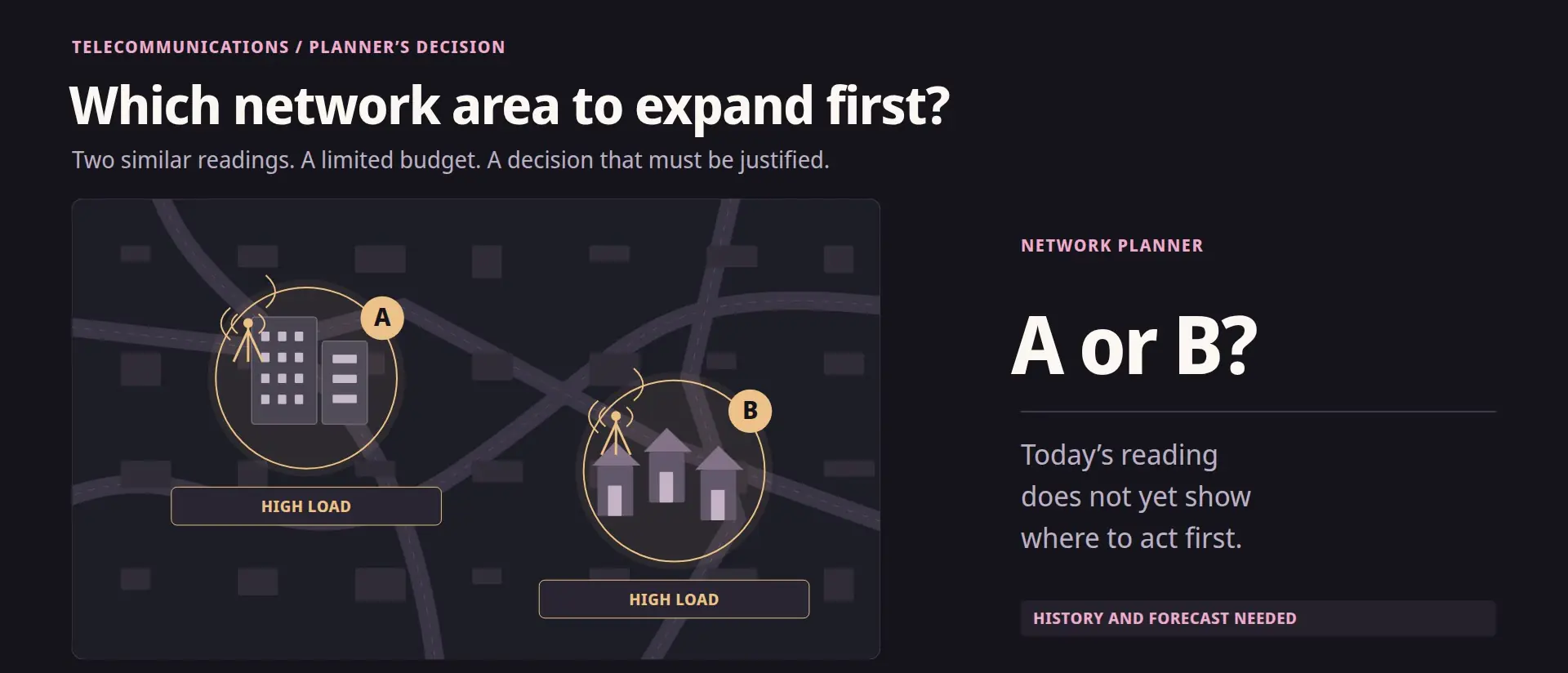
Which area to expand?
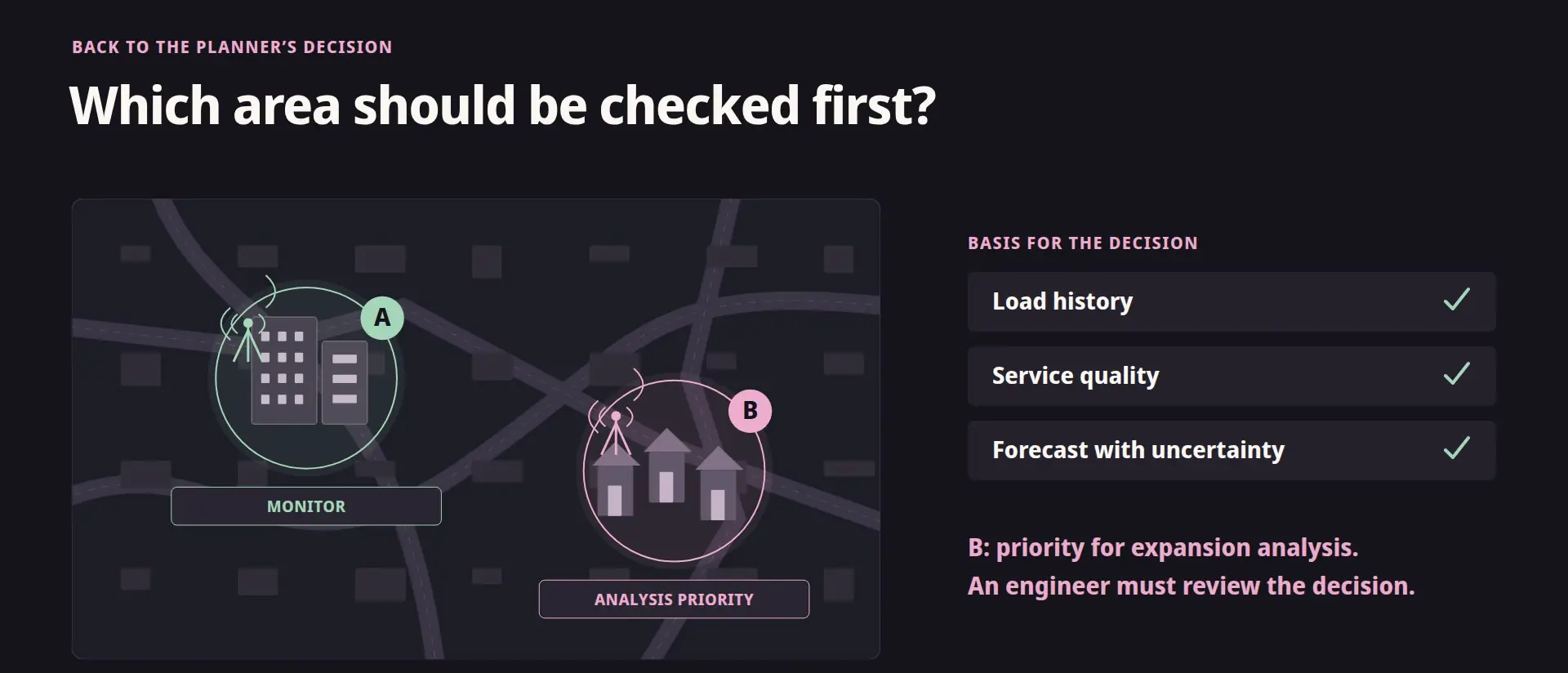
Imagine a telecommunications network planner. Two areas are under heavy load, and the budget for capacity expansion is limited. Which one should get priority? Today's reading doesn't settle it yet.
02 / 06
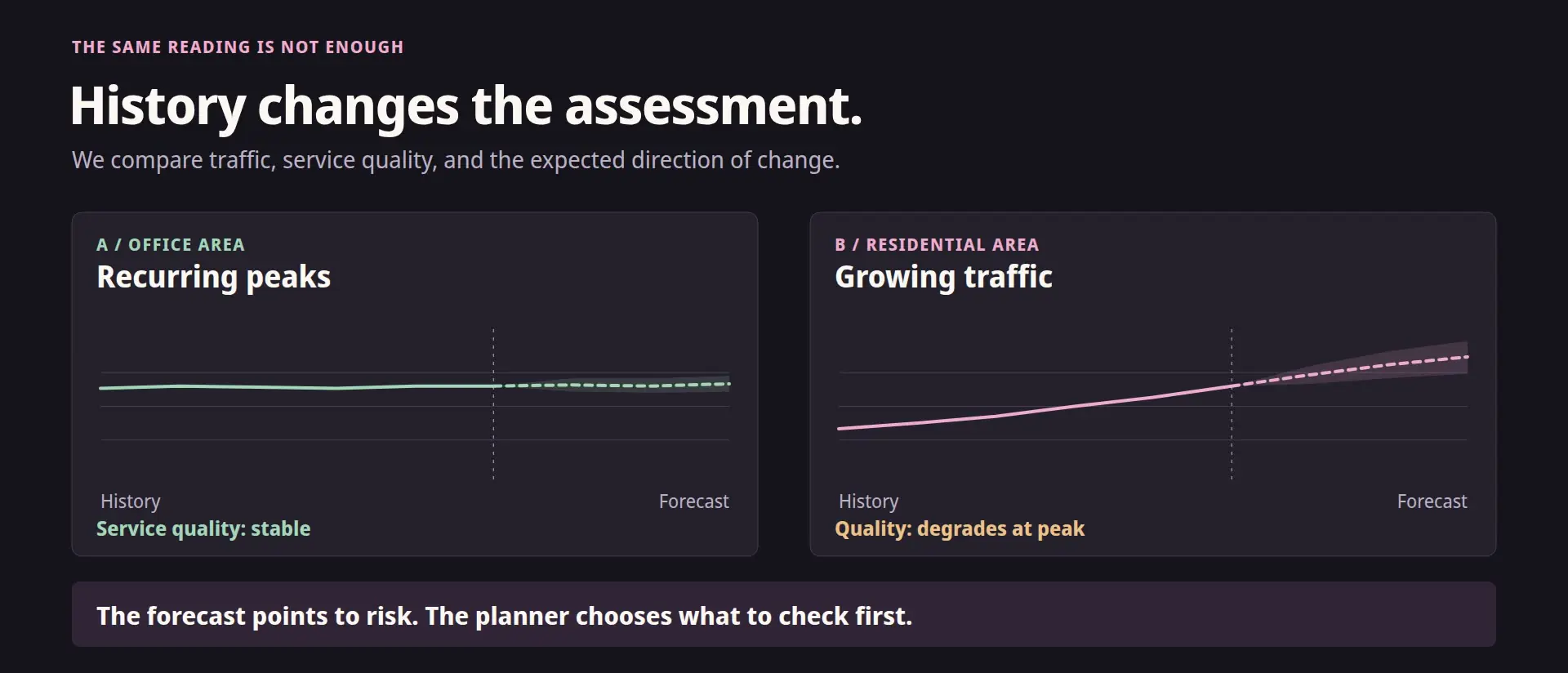
What do history and forecasts change?
In the office area, high load regularly returns at the same time of day, and quality stays stable. In the residential area, traffic is growing, and problems appear at peak hours. The planner needs history, quality information, and a forecast. On that basis, they decide where to assess the need for expansion first.
03 / 06
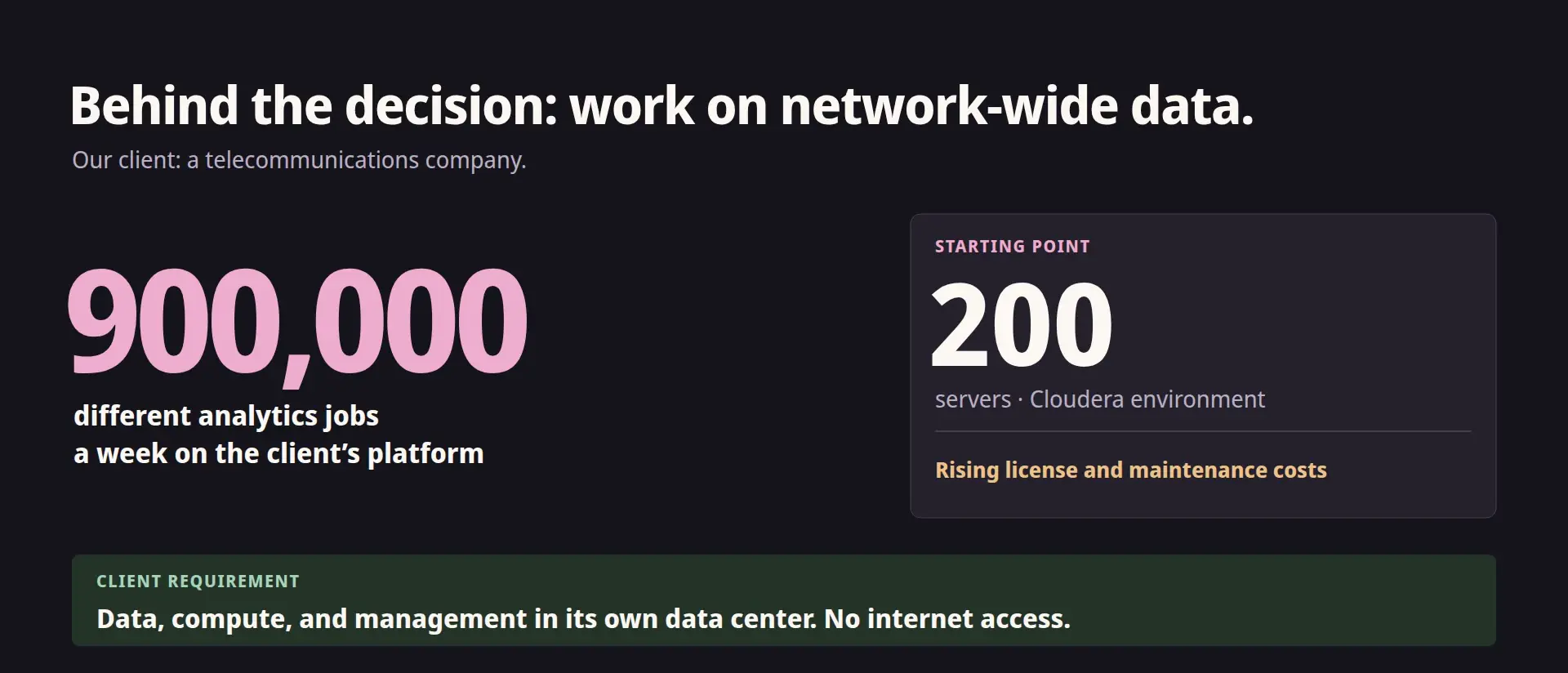
Why a data platform?
Such decisions require processing data from the whole network. Our client was a telecommunications company. Its platform ran nine hundred thousand jobs a week. Costs were rising, and teams needed faster analytics and models. Everything had to run in the client's data center, without internet access.
04 / 06
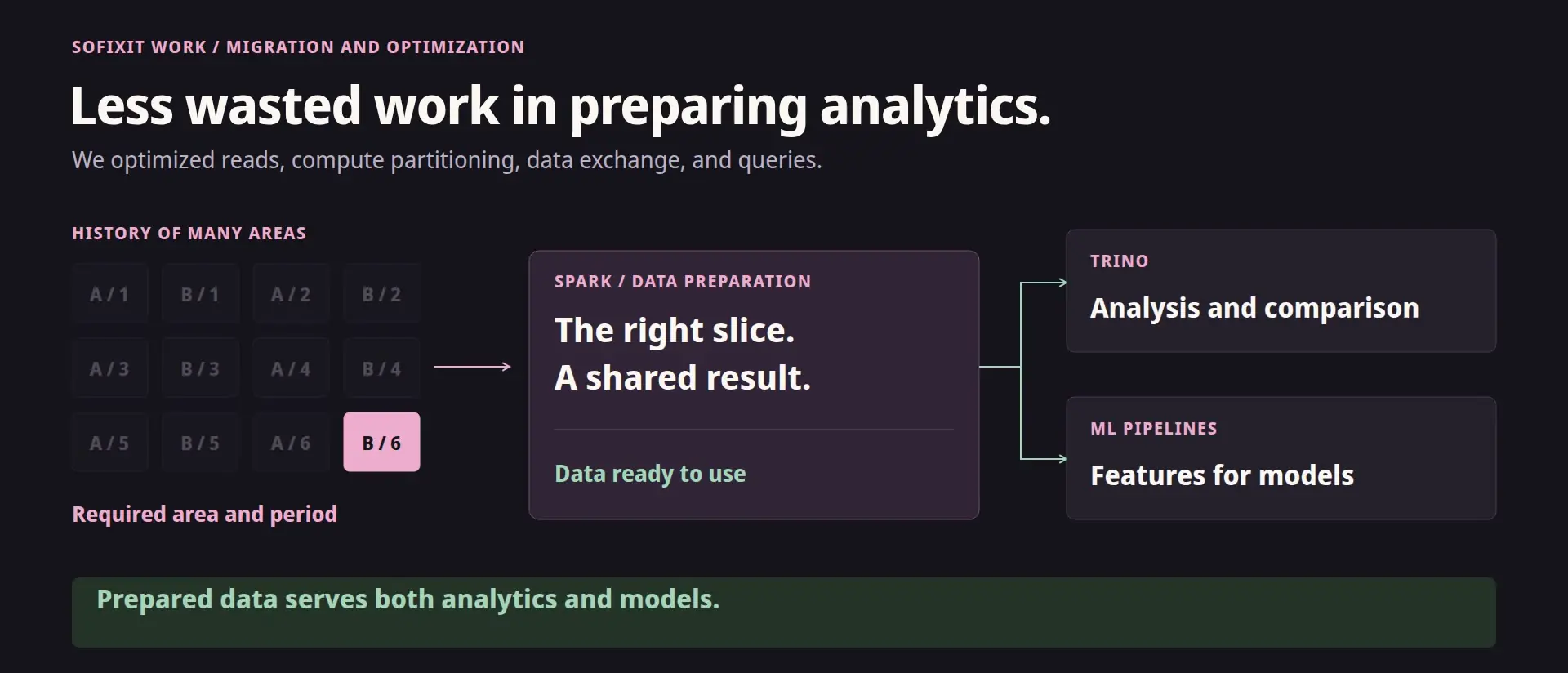
What did Sofixit do?
Sofixit rebuilt the platform and optimized how this work was executed. We improved data reads, the partitioning of computation, data exchange between processes, and queries. Spark prepared the data, and Trino served the stored results for analysis. ML pipelines used the same foundation.
05 / 06
Back to the planner’s decision
They see what the recommendation is based on and can compare options. This is the kind of data use a modern platform is built for.
06 / 06
Platform modernization results
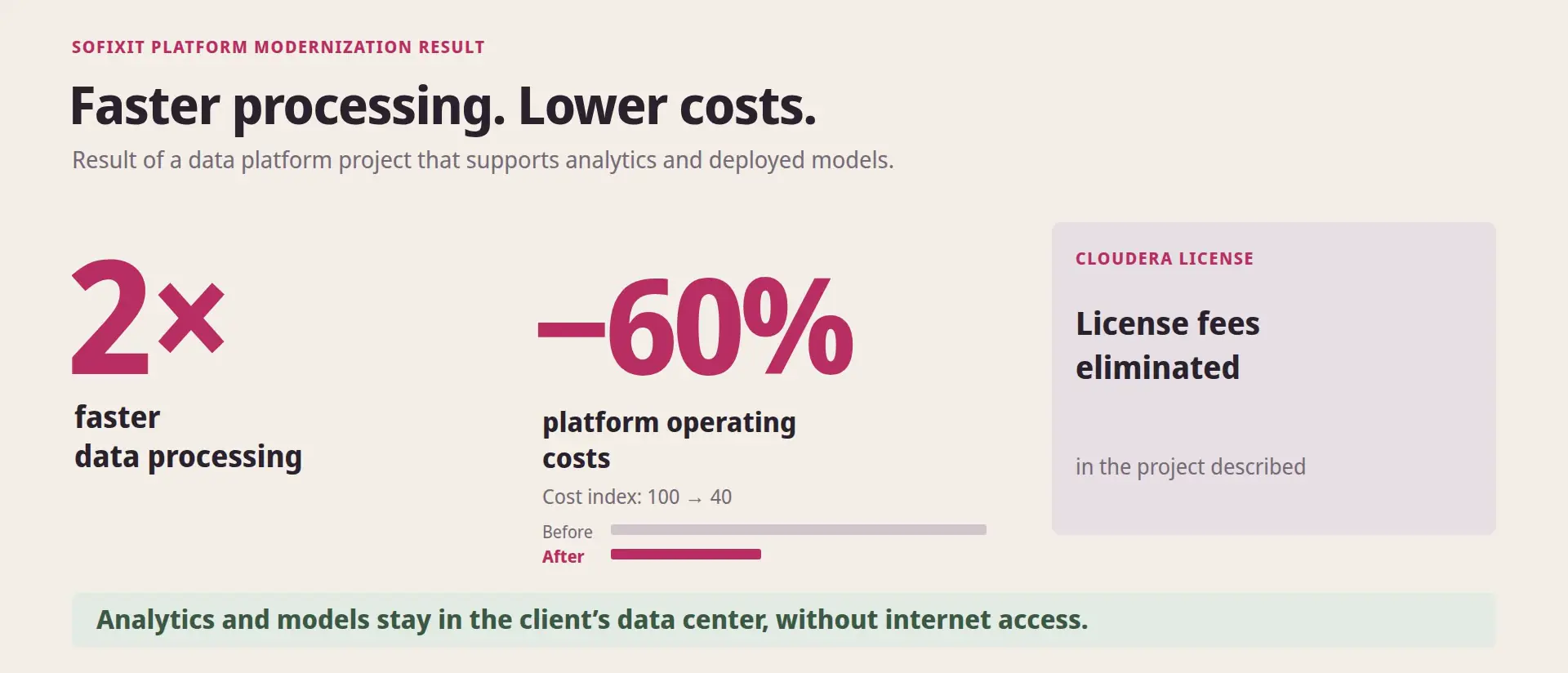
In this project, processing became twice as fast, and operating costs fell by sixty percent. Cloudera license fees were eliminated. Analytics and deployed models stayed in the client's data center.
Results
- Processing became twice as fast.
- Operating costs fell by 60%.
- Cloudera licence fees were eliminated.
- Analytics and deployed models stayed in the client's data centre.
Start with
Fixed scope, fixed price
Data platform cost review
Where your data platform burns money, what can be fixed now, and what a migration off expensive licences would save.
From
€4,200net
Duration: 2 weeks
Who leads it: A data platform architect who has led migrations off Cloudera, with a performance engineer for the profiling.
Order the reviewServices:Data foundation for AI
Related case studies
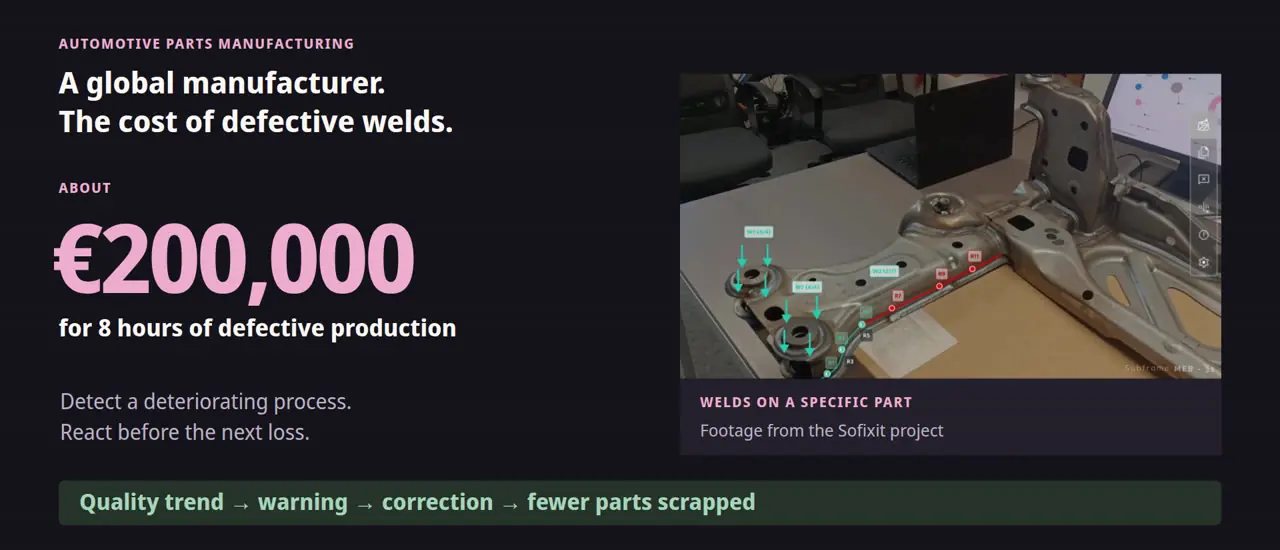
Weld quality AI: 86% fewer defective parts
Global automotive parts manufacturer · Automotive, metal components
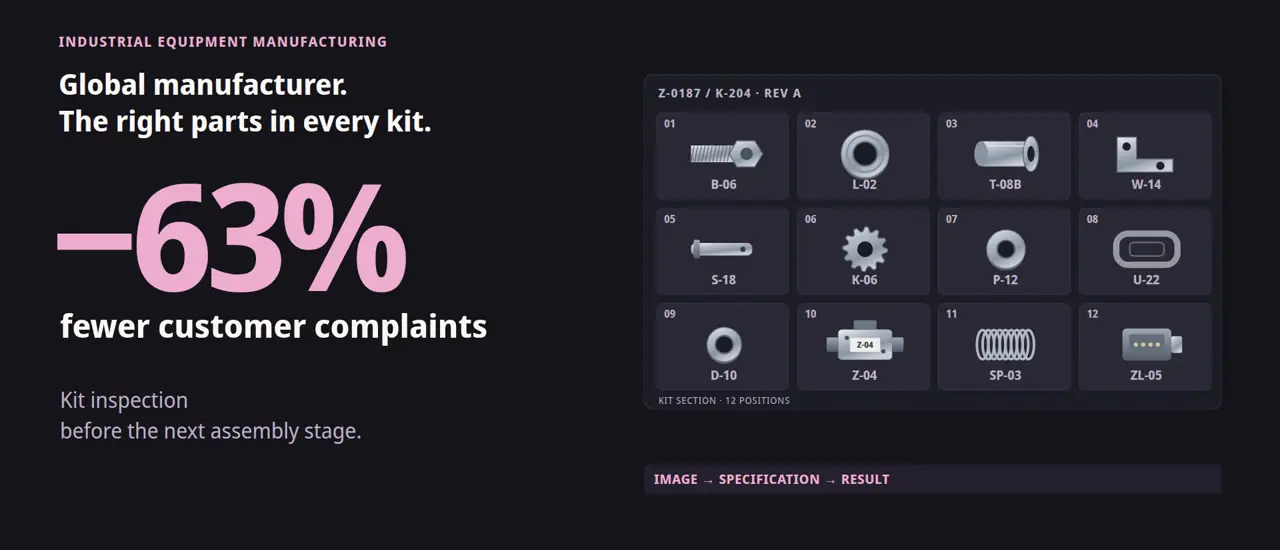
Kit inspection with computer vision: 63% fewer complaints
Global manufacturer of industrial equipment · Industrial equipment manufacturing
GenAI quoting agent: from 4 to 6 hours to 15 minutes
Manufacturing company · Manufacturing
Let's talk about your project
Tell us about your case
Pick one problem.
Show us the data you have.
Let's agree a measurable goal.
Name the process and the data you have. An engineer, not a call centre, gets back to you.
We reply within one business day.